Ear Piercing for Children: A Parent Guide
Ear piercing for children is safe when performed by a trained professional using sterile, implant-grade jewellery, with a parent present and aftercare followed every day.
Read the Full AnswerGrown-Ups
Clear, detailed answers about your child’s piercing experience—from getting ready and choosing jewellery to aftercare, healing, and knowing when to contact our team.
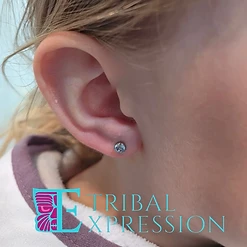
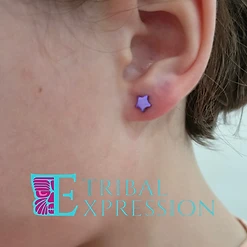
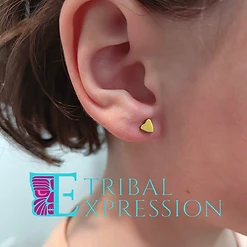
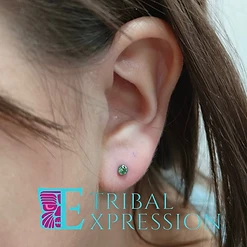
Great first earrings, healed and happy
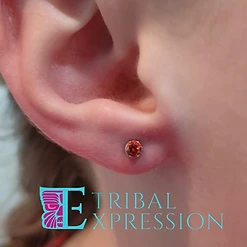
Real Tribal Expression kids wearing studs made in our Calgary workshop.
8 answers
Ear piercing for children is safe when performed by a trained professional using sterile, implant-grade jewellery, with a parent present and aftercare followed every day.
Read the Full AnswerThere is no single national minimum age; studios set their own policy above the local legal floor, and a parent or guardian must consent for anyone under 18.
Read the Full AnswerReadiness is about your child, not a birthday. If they ask for it themselves, can sit calmly for a few minutes, and can tell a grown-up to stop, they are likely ready — and at Tribal Expression, ear lobes are pierced from age eight.
Read the Full AnswerChoose a studio that pierces with sterile, single-use equipment in a dedicated space, shows you its process openly, welcomes every question, and puts your child's comfort — and their right to stop — before the booking.
Read the Full AnswerFear is allowed. Tribal’s method: remain calm, be honest, explain what will happen, never hide the procedure, never trick the child, never dismiss the fear. Keith often gives children a measurable reference point — comparing the sensation to a needle at the doctor’s office — so the unknown becomes familiar. Being brave does not mean having zero fear. But if the child says no, we stop.
Read the Full AnswerA few calm days of honest talk, a good night's sleep, a snack, and a plan your child helps make — that is the whole preparation toolkit.
Read the Full AnswerNo. Do not promise “it won’t hurt at all.” Pain is subjective, different children experience sensation differently, and a broken promise damages trust. Keith generally describes the sensation as quick pressure, a quick squeeze — very brief, over rapidly, a little like someone squeezing your ear really quickly. Be honest. Do not exaggerate. Do not dismiss. Do not lie to reassure.
Read the Full AnswerKids’ ear piercing is one complete price per ear. The professional piercing and the complete jewellery for that ear are both included — there is no separate piercing fee to calculate and no jewellery price to add afterward. Choose the style, see the price: that is the complete price for that ear. Identification is required for both the parent or legal guardian and the child receiving the piercing.
Read the Full Answer4 answers
Then we do not pierce. A booked appointment, the drive, chosen jewelry, or a previous yes does not override the child’s current refusal. Tribal may apply its $35 sterile-setup charge once substantial sterile preparation has occurred and the family decides not to proceed — not as punishment, but because sterile supplies and staff time have already been committed.
Read the Full AnswerNo. Tribal Expression does not hold children down for elective ear piercing, does not ask parents to hold children down, and does not continue a piercing against a child’s clear refusal. This is a central body-autonomy policy: the piercing is intended to be positive, voluntary, empowering, memorable, and family-oriented.
Read the Full AnswerThen one ear it is. If a child has the first ear pierced and then says they do not want the second one, Tribal Expression stops — no pressure, no forcing, no restraining, no bargaining, no rushing, and no parent holding the child down. The family may return later for the second ear when the CHILD is ready, and the child is never financially punished for needing to come back.
Read the Full AnswerThis is not uncommon, and an emotional response can be normal — crying does not automatically mean the child has withdrawn consent. The Tribal process: acknowledge the emotion, never say “stop crying,” help them settle, let them look at the first earring, reconnect them with the excitement, then ask the child directly whether they still want the second ear. Yes means the piercer continues helping them; no means stop. Crying does not necessarily mean no — but no still means no.
Read the Full Answer8 answers
Plan on one unhurried visit: check-in and documented consent, cleaning and marking, the quick pinch of the piercing itself, a proud look in the mirror, and aftercare explained until you both feel sure.
Read the Full AnswerWelcome to the child-experience hub — how a Tribal Expression appointment is built around your child: no restraint, body autonomy, honest talk about feelings, your role in the room, and what happens if tears or a change of mind appear mid-visit.
Read the Full AnswerPlacement is a visual-balance decision, made one ear at a time for your child’s anatomy. The piercer marks the proposed placement, and before anything happens the CHILD is shown the marks first, then the parent — child first, parent second. Anyone can request an adjustment, and the piercing does not proceed until the placement is accepted.
Read the Full AnswerThe children’s piercing room is a family room, large enough for the child and family. Before the piercing begins, confirm which ear the piercer will work on first, then position yourself on the OPPOSITE side of the child from the ear being worked on — this leaves the piercer’s working side clear while you hold your child’s hand and speak calmly. When the piercer changes ears, adjust so the working side is clear again. Do not try to distract the child; let them engage with the piercer.
Read the Full AnswerYour emotional reaction can meaningfully influence your child’s experience — children notice anxiety, agitation, facial expressions, and tone of voice. Prepare yourself the day before or the morning of: ask “How do I want to present myself to my child?” The ideal presence is calm, supportive, confident, available, and not dismissive.
Read the Full AnswerYes — Keith generally prefers both ears during the same appointment when the child wants both ears pierced. This does not mean simultaneously. One healing period is simpler for the whole family than two, because more total weeks managing a fresh piercing simply means more opportunities for real-life events to interfere. Child autonomy still overrides this preference: if the child stops after one ear, we stop.
Read the Full AnswerTraditionally, no. Tribal Expression prefers one piercer, one ear, then the second ear, during the same appointment. It is difficult for two separate piercers to be perfectly synchronized in timing, positioning, hand movement, angle, and execution — and Tribal prefers precision over the perceived speed benefit. We prefer precision over speed.
Read the Full AnswerTribal regularly sees children and adults whose prior piercings are uneven or poorly placed, and can assess the existing piercing, scar tissue, and current anatomy to determine whether corrective placement is possible and create a more visually balanced plan. Every case is individual — this page is consultation-led, and the right first step is booking a corrective placement consultation.
Read the Full Answer1 answer
Tribal Expression prepares and sterilizes the instruments, new single-use needles, and new jewellery for each client’s procedure using STATIM cassette sterilization systems, transfers the prepared setup directly to the piercing room in its cassette, and monitors sterilizers with biological spore testing more frequently than the minimum required for the studio — a practice fundamental to the studio for more than 23 years.
Read the Full Answer15 answers
First earrings should be implant-grade studs with smooth finishes and closures that stay put — chosen for how they heal, not just how they look. In Calgary, ours are made in-house.
Read the Full AnswerTraditional butterfly-back earrings were extremely common from approximately the 1970s through the 2000s — many parents remember sleeping on them and having the post poke behind the ear. Tribal Expression prefers properly fitted professional flat-back body jewelry: a smooth disc behind the ear, less protruding-post discomfort, and improved comfort during daily wear and sleeping. Note the terminology: “flat back” is the shape of the back, while “threadless” and “internally threaded” are connection systems.
Read the Full AnswerTribal Expression’s preferred titanium is ASTM F136 implant-grade titanium. The word “titanium” on a package is not enough — different titanium grades can look similar, polish similarly, and anodize similarly, and a parent cannot reliably determine implant-quality material by looking. Tribal requires reputable sourcing, material traceability, recognized standards, appropriate documentation, and mill certificates. Nickel is not intentionally used as an alloying element in ASTM F136 titanium, which is strongly preferred where nickel sensitivity is a concern.
Read the Full AnswerSeeing a little extra post length shortly after an ear piercing is often completely intentional. Fresh piercings need room for normal swelling — approximately 1–2 mm of additional starter length is a helpful visual reference, although the correct fit always depends on the individual ear, anatomy, jewelry and professional assessment. Once the swelling has settled sufficiently, that extra length may no longer be necessary, and that is when a professional downsize can be considered.
Read the Full AnswerBecause the quality of body jewelry is not determined solely by the name of the metal. Tribal puts substantial care into the manufacture and hand-polishing of its jewelry: actual material, machining, tolerances, smoothness, polish, finish, connection quality, post length, and fit all matter. Keith’s goal is an exceptionally smooth jewelry surface that minimizes rough irregularities against healing tissue.
Read the Full AnswerNot while the piercing is young, and weight alone is not the only issue — the thickness of the part carrying the weight matters. A heavy decorative earring suspended from a very thin wire concentrates mechanical stress on a small portion of the piercing, and over long periods this can contribute to stretching, elongation, tissue remodeling, and elongated earring holes. Keith’s general recommendation: once the piercing is mature enough, wear large or fancy earrings for the occasion, then return to appropriate everyday jewelry.
Read the Full AnswerThreadless jewelry uses a push-pin tension connection: the post contains a small opening, and the decorative front contains a thin pin given a slight controlled bend. When the pin is inserted into the post, that controlled bend creates tension that holds the front securely in place. Threadless jewelry does not tighten like a screw — never twist it. Once per month, with freshly cleaned hands, gently check that the front and back remain fully seated.
Read the Full AnswerGold plated is not the same as solid gold. Gold-plated jewelry has a thin layer of gold over another substrate, and over time the coating may wear, scratch, chip, or become damaged — exposing the material underneath to the piercing. The substrate may be brass, an inexpensive mixed alloy, a high-nickel alloy, or a poorly documented metal.
Read the Full AnswerSterling silver is not Tribal Expression’s preferred material for a fresh or still-maturing piercing. Sterling silver can tarnish over time, and Keith has personally seen long-term silver jewelry exposure associated with persistent grey or dark tissue discoloration in some clients — professional observation, not a guarantee.
Read the Full Answer“Hypoallergenic” is a marketing description — not a complete material specification. Likewise, a vague “nickel-free” claim should not replace actual material verification. Parents should ask: what exact material is it, who manufactured it, what specification does it meet, is it traceable, and is material documentation available?
Read the Full Answer“Surgical steel” alone is not enough information. Certain appropriately specified stainless steels can be suitable body-jewelry materials — but stainless steel commonly contains nickel, and while the chromium-rich passive surface provides substantial corrosion resistance, we do not claim nickel can never release. Tribal Expression moved away from stainless-steel body jewelry more than 15 years ago and strongly prefers titanium.
Read the Full AnswerKeith’s minimum general purity preference is 14 karat gold when appropriate solid-gold body jewelry is used. 14k gold is approximately 58.3% pure gold, meaning approximately 41.7% consists of other alloying elements — and the alloy matters. 14k does not automatically equal safe body jewelry. Tribal prefers gold made specifically with prolonged body contact and body-jewelry biocompatibility in mind.
Read the Full AnswerNickel is a major cause of allergic contact dermatitis associated with jewelry. Moisture, sweat, salts, and the local chemical environment can contribute to metal-ion release from certain alloys — and those released nickel ions can trigger dermatitis in sensitized individuals. Titanium, in which nickel is not intentionally used as an alloying element, is strongly preferred where nickel sensitivity is a concern.
Read the Full AnswerThe core problem with cheap fashion jewelry is unknown or low-quality material — white brass, mixed pot-metal alloys, poorly documented base metals, and unknown nickel-containing alloys. It is not that everything inexpensive is automatically unsafe, but very inexpensive jewelry deserves extra scrutiny because low price can sometimes be achieved through cheaper materials or manufacturing. Price itself is not certification.
Read the Full AnswerOnce healing is confirmed — usually around the six-to-eight-week mark, and always by your piercer — the first studs can come out. Most families turn the first change into a small celebration.
Read the Full Answer15 answers
Welcome to the Tribal Expression aftercare hub — seven topic cards covering the daily cleaning routine, healing timeline, water and swimming, daily life (sleep, hair, sports), troubleshooting, jewellery fit, and the products to avoid. Every card opens the full canonical guide.
Read the Full AnswerEar lobes typically heal in about six to eight weeks with a simple routine: clean twice a day as shown, hands off, and leave the first studs in until your piercer confirms healing is complete.
Read the Full AnswerAt Tribal Expression, the normal children’s earlobe aftercare routine is gentle cleaning twice per day — once in the morning and once in the evening, approximately 12 hours apart. Wash your hands first, use the recommended hypochlorous-acid aftercare solution and clean disposable cotton swabs, gently clean around the front and back of the jewellery, and then leave the earrings alone. Do not deliberately twist, spin or pull the jewellery through the piercing.
Read the Full AnswerNormal healing fluid can dry around the front or back of the jewellery and form what piercers commonly call crusties. Crusties are primarily dried healing secretions and debris — they do not automatically mean infection, and they should not automatically be called biofilm. The goal is gentle removal during normal twice-daily cleaning.
Read the Full AnswerDo not pick crusties off dry. Soften first: cleaning after a warm shower or bath helps because moisture softens dried healing debris. Spray the recommended hypochlorous-acid aftercare around the front and back, wait about one to two minutes, then use a thoroughly wet, clean cotton swab to gently remove the loosened material. Never scrape aggressively or use fingernails, tweezers or improvised tools.
Read the Full AnswerYes. Our rule is that routine over-cleaning can be as problematic as under-cleaning. Aftercare is a balance between removing normal healing debris and minimizing irritation to fragile tissue. The normal protocol is two gentle cleanings daily. Do not re-scrub every time you notice a tiny crust or your child briefly touches the area.
Read the Full AnswerDo not panic, and do not aggressively double-clean to make up for it. Resume the normal routine at the next scheduled cleaning. Consistency matters because dried healing material can accumulate and become rough around the jewellery — but one missed cleaning does not mean the piercing is ruined.
Read the Full AnswerYes — sterile saline is still a very good piercing cleanser. Tribal Expression trusted sterile saline exclusively for more than 18 years, and it remains an acceptable option today. What changed is the wound-care technology available to the studio: Tribal Expression now prefers PureCleanse™, a stabilized hypochlorous-acid antimicrobial wound cleanser, because it adds manufacturer-supported antimicrobial and wound-cleansing functions while keeping the gentle philosophy saline always represented. Saline is not wrong — Tribal simply believes there is now a better option for the aftercare system it uses.
Read the Full AnswerNo — not for routine healing aftercare. Alcohol is an effective antiseptic, but it is harsh and can damage or irritate healing tissue. Tribal Expression’s principle: a product being good at killing germs does not automatically make it good for repeated use on healing tissue.
Read the Full AnswerNo — not for prolonged routine aftercare. Hydrogen peroxide can be cytotoxic and irritating to healing cells. It can have antimicrobial uses in other contexts, but that does not make it ideal for repeated piercing wound care.
Read the Full AnswerNo — do not routinely place Polysporin or similar antibiotic ointments on an uncomplicated healing piercing unless directed by an appropriate healthcare professional. Ointments are occlusive, topical antibiotic ingredients can cause irritation or contact sensitivity in some people, and an uncomplicated healing piercing does not automatically require topical antibiotics.
Read the Full AnswerNo. Tea tree oil is not part of Tribal Expression’s routine fresh-piercing protocol. Essential oils can irritate healing tissue and cause dryness, burning, and contact sensitivity in some people.
Read the Full AnswerDo not perform “home chemistry” on a fresh piercing when properly manufactured aftercare is available. Home-prepared salt water can have inconsistent concentration, non-sterile preparation, contaminated containers or water, and inaccurate measuring — it is very easy for a home solution to be incorrectly formulated.
Read the Full AnswerYes. Normal showering, hair washing and face washing can continue. Perform the normal piercing cleaning after the shower so shampoo, conditioner, face wash, soap and other products are not left sitting around the healing piercing.
Read the Full AnswerKeep personal-care products off the fresh piercing whenever practical during initial healing — sunscreen, makeup, foundation, moisturizer, face creams, acne products, hairspray, styling products and fragrance. Healing tissue may be more easily irritated, and personal-care products are not intended to sit inside a fresh piercing. If accidental exposure happens, gently rinse or clean as normal rather than scrubbing.
Read the Full Answer8 answers
Long or fine hair can wrap around new jewellery, and hairbrushes, combs, towel fibers and vigorous drying are the most common snag opportunities. During the first several weeks: slow down near the ears, consider keeping long or fine hair up and away, brush carefully, and do not rub towels aggressively around earrings — and watch for loose towel threads.
Read the Full AnswerUsually, yes — but the device should not press on or rub the front or back of the new piercing. Over-ear styles can sometimes be easier when the entire ear sits inside the cup, but actual fit matters more than the category. If a headset touches the jewellery, use a different style during the initial approximately six-week aftercare period, and periodically clean compatible headphone and earbud surfaces per manufacturer directions.
Read the Full AnswerHelmets and safety equipment can introduce pressure, rubbing, snagging, sweat and difficult-to-clean surfaces — so families should consider sports seasons before piercing. Never stop using required safety equipment. Instead, plan the piercing timing or modify contact where safe and appropriate.
Read the Full AnswerCheck the written league, school and referee rules BEFORE piercing. Some sports permit covered earrings; others prohibit jewellery completely even when bandaged. Never rely on hiding jewellery under a bandage where rules prohibit it, and do not repeatedly remove and reinsert jewellery from a fresh piercing for games or practices. If the sport requires complete jewellery removal, waiting until the off-season may be the better choice.
Read the Full AnswerIf temporary protection is appropriate and permitted by the sport: wash hands, use a clean adhesive bandage, place the soft padded section over the front of the jewellery with the adhesive attaching only to surrounding intact skin — never directly to the jewellery or piercing opening — repeat over the flat back if necessary, and remove the bandage after the activity.
Read the Full AnswerPlan before you pierce: Tribal actively wants families to consider upcoming vacations, lessons, pools, lakes and camps before booking, because a complication during a vacation — especially abroad — may disrupt the holiday and complicate access to your usual piercer or medical care. During initial healing, avoid intentionally submerging new ear piercings in pools, hot tubs, lakes, rivers and oceans. If the ears are accidentally submerged, clean the piercing promptly — ideally within approximately 30 minutes when practical — and that cleaning normally REPLACES the next routine cleaning rather than adding a third one.
Read the Full AnswerDirect pressure can irritate healing ears and may partly explain why one side heals differently from the other. Use the two-pillow gap: place two regular pillows beside each other with about a one-inch gap so your child’s ear can naturally fall into the opening while side sleeping. Travel or piercing pillows can also help, though we find the two-pillow gap often stays useful as children move during sleep.
Read the Full AnswerInspect the piercing and jewellery once, gently — a snag does not automatically mean damage. Check that threadless ends remain fully seated or threaded ends remain securely screwed in, then return to the normal cleaning protocol. Contact us if there is tissue damage, increasing swelling, displacement, or uncertainty.
Read the Full Answer11 answers
Some mild redness, tenderness and inflammation; dried blood spotting early on; and normal pale healing secretions that dry into crusties can all occur. Initial procedural tenderness commonly settles substantially during the first couple of days, though children vary. The most useful question is usually whether the pattern is improving or worsening — one symptom alone does not automatically diagnose infection.
Read the Full AnswerSix weeks marks the end of the initial structured aftercare period for an uncomplicated child earlobe piercing — not full healing. Keith explains ear-piercing healing in two broad phases: initial healing, then maturation, the “toughening-up” phase. He personally thinks in terms of approximately six months to one year before an earlobe piercing is substantially mature. Feeling healed, being ready for a jewelry change, and being ready to leave jewelry out are three different things.
Read the Full AnswerA fresh ear piercing intentionally starts with a slightly longer post — often roughly 1–2 mm of extra length — so normal early swelling has room. Once that swelling has settled, a professional piercer can replace the longer post with a shorter, properly fitted one: a downsize. A properly fitted shorter post reduces unnecessary jewelry movement and snagging, and downsizing does not mean the piercing is completely healed. At Tribal Expression, the downsize service is 20.00 CAD per ear.
Read the Full AnswerSix weeks is not a magical “fully healed” finish line. We distinguish three things: the initial structured aftercare period (roughly the first six weeks of the ordinary lobe protocol), the maturation or toughening-up phase that follows, and a substantially mature piercing — which Keith personally thinks of as approximately six months to one year for an earlobe. Changing jewellery and leaving jewellery out are not the same thing.
Read the Full AnswerBook a Tribal Expression consultation. Redness, swelling, tenderness or discharge can have multiple causes — irritation, pressure, material sensitivity, aftercare problems, trauma, or true infection. We can evaluate the piercing variables; if a medical infection is suspected, the right next step is an appropriate healthcare practitioner. This website does not diagnose infection.
Read the Full AnswerA bump beside a piercing does not automatically mean keloid. First we investigate common piercing variables: pressure, sleeping, excessive movement, post length, jewellery too tight, snagging, material, aftercare, accumulated debris and repeated touching. True keloid-type scars are distinct scar disorders where personal and family predisposition matters. We can assess common irritation; suspected true keloids belong with medical or dermatology evaluation.
Read the Full AnswerDo not force the jewellery back through a shrinking channel. Place the jewellery in a clean bag or container and book a reinsertion appointment at Tribal Expression as promptly as practical. We have professional tools and experience that may allow the jewellery to be guided back into a viable channel without unnecessary repiercing — often with minimal discomfort when addressed early.
Read the Full AnswerSome swelling can occur, but jewellery beginning to sink significantly into tissue is not an ideal normal healing state and should be assessed. We can investigate why swelling increased, assess pressure, trauma, aftercare and fit, professionally replace the post with a longer appropriate length while the situation remains within piercing scope, and reassess once swelling resolves. Do not dig jewellery out or squeeze tissue to expose it.
Read the Full AnswerAn impact does not automatically mean the piercing has been damaged — but it can create swelling, tenderness, bleeding, displacement or a change in jewellery fit. Inspect the ear once with clean hands, check that the jewellery remains properly seated, resume normal aftercare, and watch the trend. One additional gentle cleaning after a significant impact is acceptable. If swelling makes the post tight, Tribal may temporarily upsize the jewellery.
Read the Full AnswerSome tenderness, slight redness and a little clear fluid are normal in the first weeks. Growing pain, warmth, spreading redness or pus are reasons to act — call us, and your doctor for anything that worries you.
Read the Full AnswerTribal Expression helps with jewellery, aftercare and piercing concerns — but the studio is not a substitute for medical assessment. Seek medical care promptly if the ear shows a worsening pattern: spreading redness, significant swelling, unusual discharge or pus, fever, or severe or increasing pain. A physician who directs jewellery removal always outranks studio guidance — follow the physician and keep the studio informed.
Read the Full Answer